The Cash Pile: A Source of Power and Perplexity
The sheer size of Berkshire Hathaway’s cash pile has sparked intense debate among investors and analysts. Some view it as a sign of confidence in the company’s future prospects, while others see it as a sign of caution or even a potential warning sign. • Berkshire Hathaway’s cash pile is not just a passive asset; it is a source of power and influence in the business world. • The company’s ability to maintain a large cash reserve allows it to take advantage of investment opportunities and make strategic acquisitions.
The company has been known to pay its shareholders a substantial amount in dividends in some years, while in other years, it has retained more cash. Berkshire’s dividend policy is not clearly defined, leaving investors with uncertainty about future dividend payments. In the past, Berkshire has paid dividends in only two out of its 125-year history, with the last payment being in 2006. It has not paid a dividend since then. CK’s decision not to announce special dividends is part of its strategy to prioritize long-term growth over short-term gains.
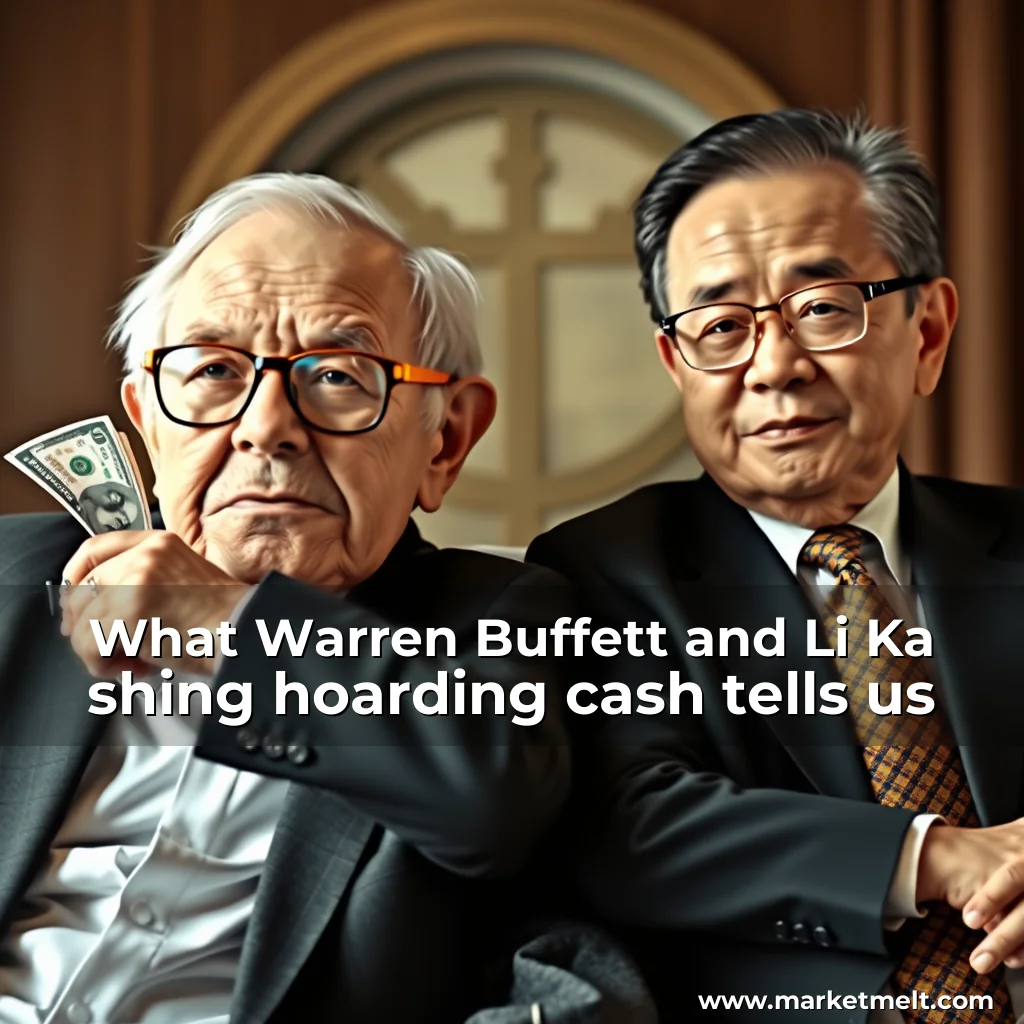
Li Ka-shing, a Hong Kong business magnate, was the new majority shareholder. Li divested his stake in the UK mobile operator Orange in 1999 for approximately US$15 billion. This significant transaction marked a major milestone in Li’s business career, showcasing his ability to sell a substantial portion of his company’s assets for a substantial amount. Li’s decision to divest from Orange was likely driven by a desire to concentrate on his core businesses and focus on growth opportunities in other markets. By selling his stake in the UK mobile operator, Li was able to free up resources and redirect them towards more promising ventures, ultimately enhancing his overall business strategy. Furthermore, divesting from Orange allowed Li to demonstrate his commitment to his shareholders, as he was able to generate significant returns on investment. Li’s decision to sell Orange was also seen as a strategic move to diversify his portfolio and reduce his exposure to a single market. This move marked a turning point in Li’s business career, as it showcased his ability to adapt to changing market conditions and make informed decisions about asset allocation. Through this transaction, Li was able to reap the benefits of selling a non-core asset, while also demonstrating his commitment to his shareholders and his ability to navigate complex business situations.
The deal, which was announced in 2019, was meant to be a major boost to the Chinese economy, but it has been plagued by controversy and regulatory hurdles. The deal, which involves Hutchison Whampoa, a Hong Kong-based conglomerate, and the Chinese government, has been delayed multiple times and has yet to be finalized.
The Pair’s Cash Hoard: A Sign of Financial Stability? The fact that the pair has a significant cash hoard is often seen as a sign of financial stability. However, this is not necessarily the case.
The Li family, who are the owners of the Li Ka Shing Foundation, have been accused of using their influence to secure favorable treatment for their business partners. The Li family’s influence is not limited to their business dealings. They have also been accused of using their wealth and influence to shape public policy and influence the political landscape of Hong Kong. The Li family’s wealth is estimated to be over $40 billion, making them one of the wealthiest families in the world. Their wealth is largely derived from their business interests, including real estate, finance, and energy. The Li family’s business interests are diverse and far-reaching.
The $3.1 billion deal was struck in 2016. When the sale went through, Trump’s company, Trump Organization, took possession of the operation.