
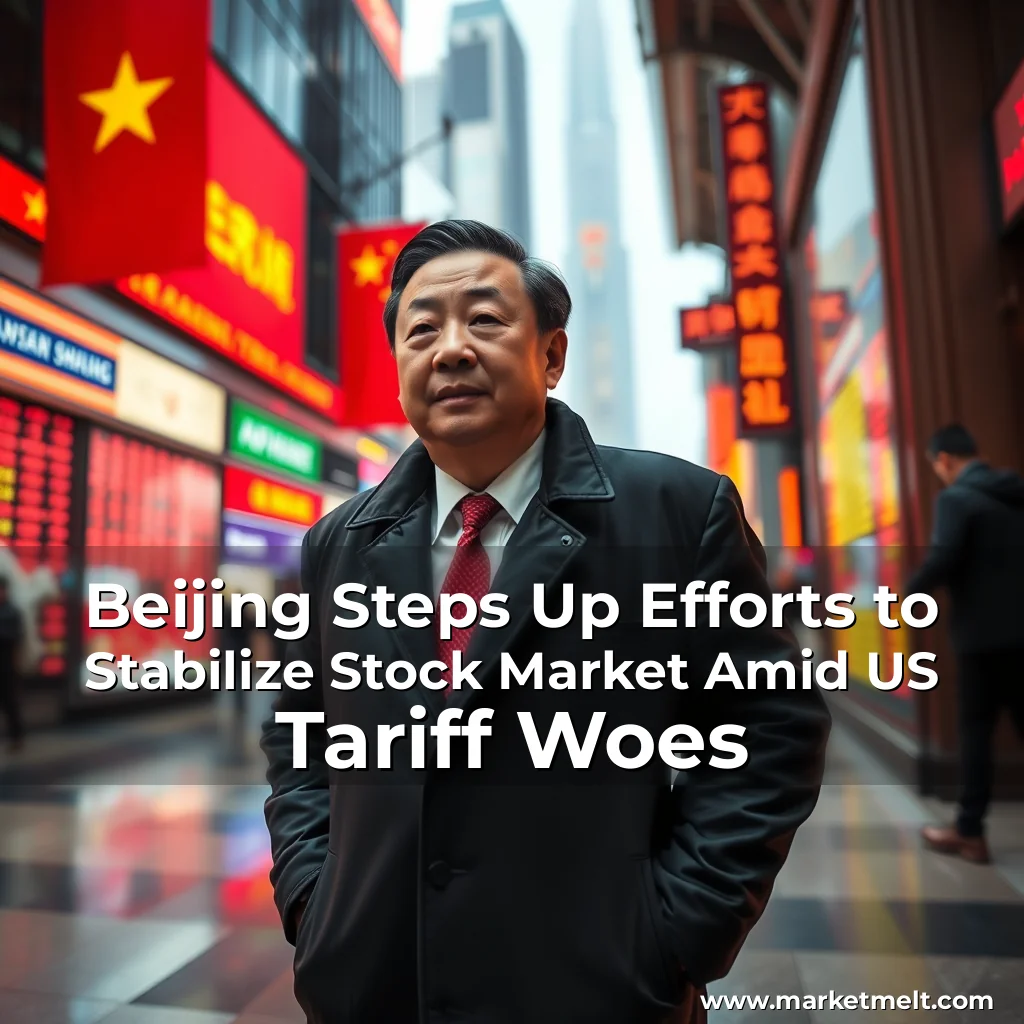
The Chinese government has taken steps to stabilize the country’s stock market, which has been rocked by the ongoing trade tensions between the US and China. Several state holding companies, including China Chengtong Holdings Group and China Reform Holdings Corp, have announced that they will increase their share investments to safeguard market stability. This move is seen as an attempt to counterbalance the market volatility caused by the ongoing trade tensions. Key highlights of the announcements made by the state holding companies include:
- China Chengtong Holdings Group will increase its holdings in stocks and exchange-traded funds (ETFs) to support high-quality growth of Chinese listed companies.
- China Reform Holdings Corp will increase its holdings in tech companies, state firms, and ETFs through its investment unit, with an initial investment of 80 billion yuan ($10.95 billion).
- China Electronics Technology Group will boost its share buybacks in listed units to bolster investor confidence.
These announcements come as a day after state fund Central Huijin said it would increase its share holdings to steady markets. This move is seen as a sign of the government’s commitment to stabilizing the market and supporting the growth of Chinese companies. The Chinese stock benchmark.SSEC rebounded in early trade on Tuesday, clawing back some of the 7% plunge from Monday, which was fueled by trade war and global recession fears. The US-China trade tensions have been a major concern for investors in recent months. Washington has imposed additional tariffs on Chinese goods, which has led to a significant decline in the value of the Chinese yuan and a rise in inflation. In response, China has imposed its own tariffs on US imports, including aircraft and automotive parts. This move is seen as a necessary step to protect the country’s interests and to maintain its economic competitiveness. The Chinese government has been working hard to stabilize the market and to support the growth of Chinese companies. The recent announcements made by the state holding companies are just one example of the government’s efforts to address the challenges facing the market.
| Company | Plan |
|---|---|
| China Chengtong Holdings Group | Increasing holdings in stocks and ETFs to support high-quality growth of Chinese listed companies. |
| China Reform Holdings Corp | Increasing holdings in tech companies, state firms, and ETFs through its investment unit, with an initial investment of 80 billion yuan ($10.95 billion). |
| China Electronics Technology Group | Boosting share buybacks in listed units to bolster investor confidence. |
The market stability efforts of the Chinese government have been welcomed by investors and analysts alike. The recent announcements made by the state holding companies have been seen as a positive sign for the market, and the increase in share investments by Central Huijin has been viewed as a strong statement of the government’s commitment to stabilizing the market. “Central Huijin has adequate confidence and competence to resolutely maintain smooth operation of the capital market,” said a spokesperson for the state fund. “We will act decisively when needed.”
The Chinese government’s efforts to stabilize the market have been driven by a desire to protect the country’s economic interests and to maintain its competitiveness in the global economy. In addition to the state holding companies, a growing number of listed companies have also announced plans to buy back shares. Oil giant Sinopec, for example, has announced that its state-owned parent will buy its China- and Hong Kong-listed shares worth at least 2 billion yuan over the next 12 months to demonstrate its confidence in the future growth prospects of the company. Orient Securities has also announced that it is studying plans to buy back shares in order to express optimism and to actively protect the interests of its shareholders. Other listed firms that have unveiled share buy-back plans include Intco Recycling Resources Co and Spring Airlines Co. China Pacific Insurance (Group) has also announced that it will contribute to market stability by increasing investment in strategic sectors. The Chinese stock market has been experiencing significant volatility in recent months, driven by the ongoing trade tensions and global recession fears. The market has been experiencing a decline in investor confidence, which has led to a decline in the value of the Chinese yuan and a rise in inflation. However, the recent announcements made by the state holding companies and the increase in share investments by Central Huijin have been seen as a positive sign for the market. The Chinese government’s efforts to stabilize the market have been welcomed by investors and analysts alike, and the recent announcements have been viewed as a strong statement of the government’s commitment to stabilizing the market. “State fund Huijin has ample liquidity and smooth financing channels to help it suppress abnormal market volatility in its role as market ‘stabilizer,’” said a spokesperson for the state fund. The Chinese government’s efforts to stabilize the market have been driven by a desire to protect the country’s economic interests and to maintain its competitiveness in the global economy. In conclusion, the Chinese government’s efforts to stabilize the market have been welcomed by investors and analysts alike.
“I am optimistic about the future of China’s capital markets. We will continue to support high-quality growth of Chinese listed companies through various means, including share investments and share buybacks.”
— Yu Xiaoping, CEO, China Chengtong Holdings Group
China’s stock benchmark.SSEC has rebounded in early trade on Tuesday, clawing back some of the 7% plunge from Monday, which was fueled by trade war and global recession fears.
In this article, we will explore the efforts of the Chinese government to stabilize the market and support the growth of Chinese companies. We will examine the recent announcements made by the state holding companies and the increase in share investments by Central Huijin, and we will discuss the implications of these moves for the market. We will also look at the challenges facing the market and the efforts being made by the government to address them. Finally, we will conclude with an analysis of the market’s prospects and the potential impact of the government’s efforts to stabilize the market.