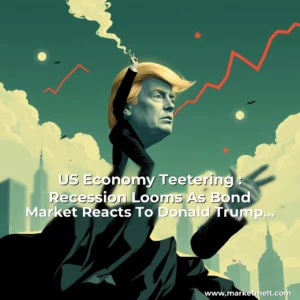
The stock market has experienced a rollercoaster ride since Donald Trump took office, with the S&P 500 Index down by about 8% since his inauguration. Despite initial optimism, the market has swung wildly as the administration implemented tariffs on countries where US companies operate, suspended some tariffs, carved out exceptions for certain industries, and escalated the trade war with China.
- The disruptions caused by the administration’s policies have unnerved investors and sent the S&P 500 spinning into its seventh-fastest correction since 1929.
- Traders initially went all-in on the “America First” bet after Trump’s election victory, but the president’s focus on tariffs has led to market volatility.
- The lack of clarity on the administration’s trade policy goals has prompted investors to turn defensive, wary of headfakes and preferring to wait on the sidelines until there are more concrete policy details.
The S&P 500 lost more than 10% in two sessions after Trump imposed the steepest US tariffs in a century on April 2. It then soared a week later when the administration reversed direction and delayed most of the duties for 90 days. Stocks have bounced around since then, but traders have struggled to find a direction.
| Company | Industry | Stock Price |
|---|---|---|
| Deckers Outdoor | Consumer Discretionary | $72.30 |
| Teradyne | Information Technology | $21.63 |
| Albemarle | Specialty Chemicals | $73.41 |
Consumer goods makers and the chip industry are grappling with the risk of higher costs from new tariffs, while travel companies are expected to feel the pinch as consumers tighten their purse strings if the economy starts struggling. “It was an extreme, for-the-textbooks, systematic risk in its purest form,” said Mark Malek, chief investment officer at Siebert. “The volatility has been wholly different from anything we have experienced in the past, and it indiscriminately spread through all sectors and asset classes like a wildfire, constantly being fuelled by random sound bites and shifting policy moves.”
Eric Diton, president and managing director at The Wealth Alliance, said, “What he was elected for was ‘Make America Great Again’, the ‘economy will be booming’. But all the trade uncertainty has actually detracted from economic growth.”
Dave Lutz, macro strategist at JonesTrading, described the market’s behavior as “whiplash after whiplash after whiplash.” Speculators have widened their net-short position on S&P 500 futures to the highest since December. The declines in equities since Trump’s inauguration have been led by the consumer discretionary and information technology sectors, with companies like Deckers Outdoor, Teradyne, and Albemarle among the biggest losers. “There is irreparable damage done,” Malek said. “Trend and momentum are extremely important in the stock market, and they really reflect investor sentiment. Unfortunately, these things are very hard to turn back around when they go down so fast.”
Equity positioning remains near the bottom of its historical range, according to data from Deutsche Bank. Bank of America strategists warned that the conditions for a sustained stock market rebound are missing and encouraged investors to sell into the most recent rebound in US equities and the dollar. Foreign investors have already gotten the memo and have been dumping American shares since the start of March, according to Goldman Sachs. “We still don’t know what it is that we are trying to achieve with Vietnam, or Canada, or Europe, and we have no idea what success looks like,” said Paul Nolte, market strategist and senior wealth manager at Murphy & Sylvest Wealth Management. This lack of clarity has prompted investors to turn defensive, wary of headfakes and preferring to wait on the sidelines until there are more concrete policy details. “We need to get past this cloud of trade policy uncertainty as it’s holding back businesses from capital expenditures and hiring plans and may also dampen consumer spending,” said Eric Sterner, chief investment officer at Apollon Wealth Management. David Lefkowitz, head of US equities at UBS’ global wealth management arm, expects profits for S&P 500 companies to be flat this year. The first-quarter earnings season is showing how corporate America is equally in the dark. Companies are withdrawing guidance, lowering earnings outlooks, and resorting to unusual solutions to manage the swings. For example, United Airlines issued two sets of profit forecasts, one if everything stays stable and the other if the economy falls into a recession. “If you look at recessions, they are started by corporations, when they stop hiring people, then start firing people, then stop spending money,” said Siebert’s Malek. He’s looking for opportunities in high-quality growth stocks that have been beaten down, but added that he’s buying cautiously. The latest Bloomberg survey of economists showed that forecasters anticipate the trade war to hit economic growth this year and next, as prices rise and consumer spending takes a hit. Jim Worden, chief investment officer of Wealth Consulting Group, is looking at healthcare, financials, and consumer staples shares, as well as stocks that have been unnecessarily crushed in the sell-off. James Abate, head of fundamental strategies at Horizon Investments, said the firm is picking up regional banks stocks. This is “a bad environment for index participation, but potentially an opportunity for active managers to prove their mettle,” he said. Still, Wall Street is approaching the stock market with a sense of caution. After all, who knows what the next 100 days will hold. “We are not past the turmoil, and I don’t think we can pass the turmoil anytime soon,” Wealth Alliance’s Diton said. “Trump is who he is.” BLOOMBERG
The Cloud of Uncertainty
The cloud of uncertainty surrounding Trump’s trade policies has been a major contributor to the market’s volatility. “We still don’t know what it is that we are trying to achieve with Vietnam, or Canada, or Europe, and we have no idea what success looks like,” said Paul Nolte, market strategist and senior wealth manager at Murphy & Sylvest Wealth Management. This lack of clarity has prompted investors to turn defensive, wary of headfakes and preferring to wait on the sidelines until there are more concrete policy details. “We need to get past this cloud of trade policy uncertainty as it’s holding back businesses from capital expenditures and hiring plans and may also dampen consumer spending,” said Eric Sterner, chief investment officer at Apollon Wealth Management. David Lefkowitz, head of US equities at UBS’ global wealth management arm, expects profits for S&P 500 companies to be flat this year. The first-quarter earnings season is showing how corporate America is equally in the dark. Companies are withdrawing guidance, lowering earnings outlooks, and resorting to unusual solutions to manage the swings. For example, United Airlines issued two sets of profit forecasts, one if everything stays stable and the other if the economy falls into a recession. “If you look at recessions, they are started by corporations, when they stop hiring people, then start firing people, then stop spending money,” said Siebert’s Malek. He’s looking for opportunities in high-quality growth stocks that have been beaten down, but added that he’s buying cautiously. Jim Worden, chief investment officer of Wealth Consulting Group, is looking at healthcare, financials, and consumer staples shares, as well as stocks that have been unnecessarily crushed in the sell-off. James Abate, head of fundamental strategies at Horizon Investments, said the firm is picking up regional banks stocks. This is “a bad environment for index participation, but potentially an opportunity for active managers to prove their mettle,” he said. Still, Wall Street is approaching the stock market with a sense of caution. After all, who knows what the next 100 days will hold. “We are not past the turmoil, and I don’t think we can pass the turmoil anytime soon,” Wealth Alliance’s Diton said. “Trump is who he is.” BLOOMBERG
Opportunities in the Chaos
Despite the uncertainty and volatility, there are still opportunities for investors to make money in the stock market. Jim Worden, chief investment officer of Wealth Consulting Group, is looking at healthcare, financials, and consumer staples shares, as well as stocks that have been unnecessarily crushed in the sell-off. James Abate, head of fundamental strategies at Horizon Investments, said the firm is picking up regional banks stocks. This is “a bad environment for index participation, but potentially an opportunity for active managers to prove their mettle,” he said. Eric Diton, president and managing director at The Wealth Alliance, believes that the current market conditions are not sustainable in the long term. “What he was elected for was ‘Make America Great Again’, the ‘economy will be booming’. But all the trade uncertainty has actually detracted from economic growth,” he said. Dave Lutz, macro strategist at JonesTrading, described the market’s behavior as “whiplash after whiplash after whiplash.” Despite the challenges, he believes that the market will find a way to recover. Mark Malek, chief investment officer at Siebert, is looking for opportunities in high-quality growth stocks that have been beaten down. “It was an extreme, for-the-textbooks, systematic risk in its purest form,” he said. “The volatility has been wholly different from anything we have experienced in the past, and it indiscriminately spread through all sectors and asset classes like a wildfire, constantly being fuelled by random sound bites and shifting policy moves.”
Despite the uncertainty, investors are finding ways to adapt and make the most of the current market conditions. As one investor said, “The market is a reflection of the economy, and the economy is a reflection of the politicians. It’s a complex system, but it’s also a system that can be understood and navigated.”
The Future of the Stock Market
The future of the stock market is uncertain, but one thing is clear: the current market conditions are not sustainable in the long term. The lack of clarity on the administration’s trade policy goals, the uncertainty surrounding the trade war with China, and the impact of the tariffs on businesses and consumers have all contributed to the market’s volatility. Despite the challenges, there are still opportunities for investors to make money in the stock market. As one expert said, “The market is a reflection of the economy, and the economy is a reflection of the politicians. It’s a complex system, but it’s also a system that can be understood and navigated.”
The latest Bloomberg survey of economists showed that forecasters anticipate the trade war to hit economic growth this year and next, as prices rise and consumer spending takes a hit. However, some experts believe that the market will find a way to recover. Jim Worden, chief investment officer of Wealth Consulting Group, is looking at healthcare, financials, and consumer staples shares, as well as stocks that have been unnecessarily crushed in the sell-off. James Abate, head of fundamental strategies at Horizon Investments, said the firm is picking up regional banks stocks. Despite the uncertainty, Wall Street is approaching the stock market with a sense of caution. After all, who knows what the next 100 days will hold. “We are not past the turmoil, and I don’t think we can pass the turmoil anytime soon,” Wealth Alliance’s Diton said. “Trump is who he is.” BLOOMBERG
Conclusion
The stock market has experienced a rollercoaster ride since Donald Trump took office, with the S&P 500 Index down by about 8% since his inauguration. Despite initial optimism, the market has swung wildly as the administration implemented tariffs on countries where US companies operate, suspended some tariffs, carved out exceptions for certain industries, and escalated the trade war with China. The cloud of uncertainty surrounding Trump’s trade policies has been a major contributor to the market’s volatility. Despite the challenges, there are still opportunities for investors to make money in the stock market. The future of the stock market is uncertain, but one thing is clear: the current market conditions are not sustainable in the long term. As one investor said, “The market is a reflection of the economy, and the economy is a reflection of the politicians. It’s a complex system, but it’s also a system that can be understood and navigated.” Despite the uncertainty, investors are finding ways to adapt and make the most of the current market conditions. As the next 100 days unfold, one thing is clear: the stock market will continue to be shaped by the unpredictable nature of politics and economics.