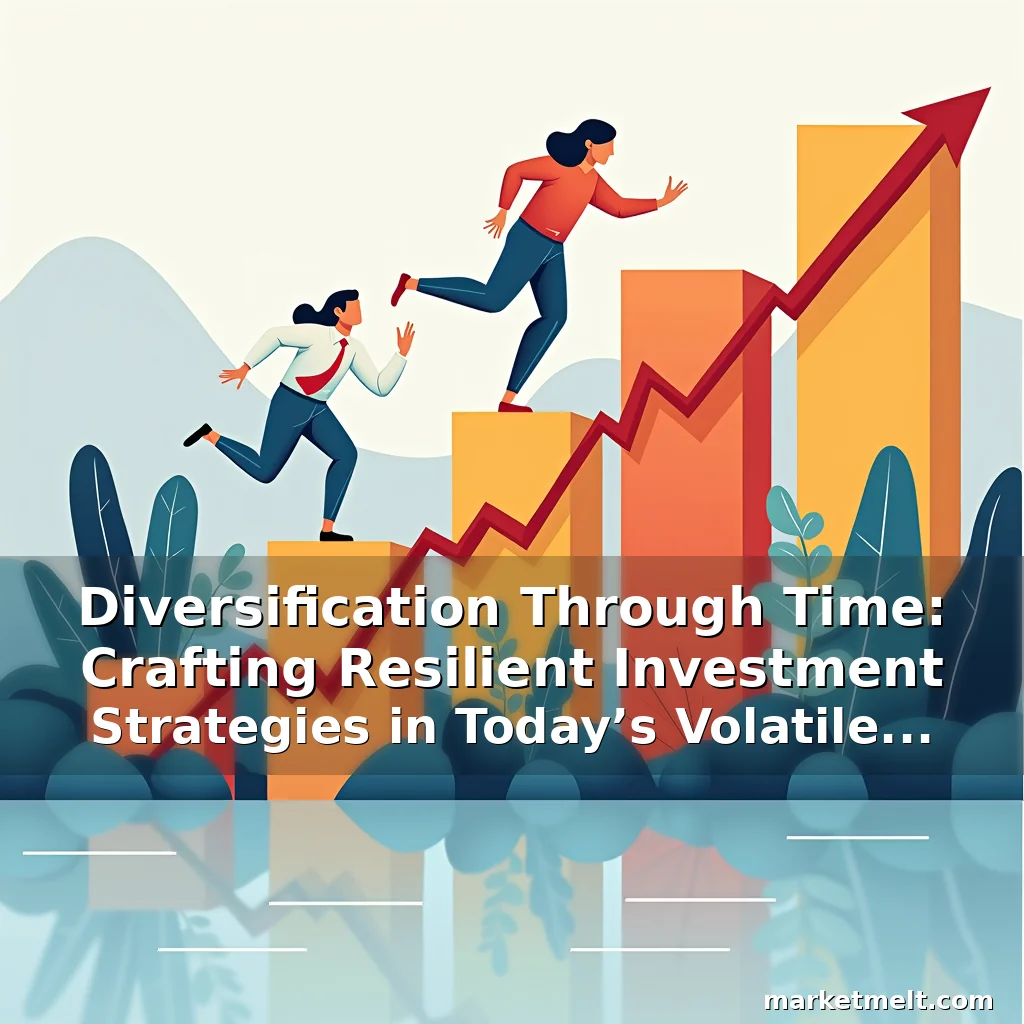
Diversification Through Time: Crafting Resilient Investment Strategies in Today’s Volatile Markets
In an era marked by rapid economic shifts and unpredictable global events, crafting a resilient investment strategy has become essential for both novice investors and seasoned professionals alike. The traditional models of wealth accumulation are being redefined as markets fluctuate under the weight of geopolitical tensions, technological advancements, and evolving consumer behaviors.
This guide delves into modern approaches to building robust portfolios capable of weathering uncertainty while capitalizing on emerging opportunities across asset classes and geographic regions.
The Foundations of Modern Portfolio Construction
At its core, successful investing begins with understanding risk tolerance and financial goals. Investors must assess their capacity to withstand losses without compromising long-term objectives, whether those involve retirement savings, business expansion, or legacy creation.
A clear definition of time horizons significantly influences portfolio allocation decisions. Short-term goals may favor cash equivalents and fixed income instruments, whereas long-term aspirations often align better with equities and alternative assets.
- Risk profiling: Formal assessments using questionnaires help quantify willingness and ability to take risks.
- Liquidity requirements: Emergency funds typically require high liquidity, necessitating different allocations than long-term investments.
Asset Allocation: Balancing Risk and Reward Across Classes
Strategic asset allocation remains one of the most critical components of any effective investment plan. By distributing capital among stocks, bonds, real estate, commodities, and other asset types, investors can mitigate volatility inherent within individual securities.
Historical data shows that well-balanced portfolios tend to outperform concentrated positions during market downturns. For example, during the 2008 crisis, diversified holdings helped many investors preserve capital when equity markets crashed.
The key lies in determining optimal weights based on current macroeconomic conditions and personal circumstances rather than adhering rigidly to static benchmarks.
Global Exposure Considerations
International diversification adds another layer of complexity but also presents significant benefits. Emerging markets offer growth potential not available domestically, though they come with higher political and currency risks.
According to a 2023 study by the International Monetary Fund, portfolios containing at least 20% international exposure experienced lower drawdowns compared to purely domestic counterparts during periods of global stress.
Hedging Techniques for Market Uncertainty
To protect against downside risks, savvy investors employ various hedging mechanisms such as options trading, futures contracts, and inverse ETFs. These tools allow partial insurance against adverse price movements without sacrificing upside potential entirely.
However, hedging comes at a cost—transaction fees, opportunity costs from reduced participation in upward trends—and requires careful calibration to avoid overprotection which might undermine returns.
For instance, buying put options provides floor protection but reduces net returns unless the market declines sufficiently to justify the premium paid.
Time Horizon Management: Aligning Investments With Life Stages
An investor’s life stage profoundly impacts strategic choices regarding asset allocation and risk management. Younger individuals with longer timelines benefit from greater equity exposure due to compounding effects over decades.
Conversely, those nearing retirement might shift towards conservative allocations featuring annuities, dividend-paying stocks, and inflation-linked bonds to ensure stable income streams post-retirement.
Middle-aged professionals may adopt dynamic rebalancing techniques where portfolios gradually transition from aggressive to balanced configurations as financial responsibilities evolve.
Tax Efficiency: Maximizing Returns Through Strategic Planning
Understanding tax implications is crucial for preserving hard-earned gains. Utilizing tax-advantaged accounts like IRAs, 401(k)s, and HSAs allows investments to grow free from ordinary income taxes until withdrawal.
Additionally, implementing tax-loss harvesting strategies enables investors to offset capital gains by selling losing positions before year-end deadlines—a technique particularly beneficial in volatile years.
Choosing tax-efficient vehicles such as municipal bonds or index funds further enhances after-tax returns through minimized distributions and favorable tax treatment.
Estate Planning Integration Within Investment Frameworks
Sophisticated investors recognize the importance of integrating estate planning considerations early in their investment journeys. Establishing trusts, naming beneficiaries, and utilizing gifting strategies ensures wealth transfer occurs efficiently according to personal wishes.
Proper documentation through wills and powers of attorney prevents legal disputes and facilitates seamless succession planning. This becomes especially vital as family businesses or multi-generational wealth accumulates.
Working with estate planners alongside financial advisors creates cohesive strategies that address both immediate needs and future intergenerational transfers effectively.
Technology & Automation in Contemporary Investing
Advancements in fintech have revolutionized how individuals manage their portfolios today. Robo-advisors use algorithms to create personalized investment plans tailored to user profiles, offering low-cost alternatives to traditional advisory services.
Automated platforms enable continuous monitoring and adjustments without manual intervention, ensuring portfolios remain aligned with changing conditions and goals automatically.
These digital solutions democratize access to sophisticated tools previously reserved for institutional players, empowering everyday investors with enhanced control over their finances.
Behavioral Finance: Overcoming Cognitive Biases In Decision Making
Cognitive biases frequently distort rational decision-making processes related to investing activities. Anchoring bias causes investors to fixate on initial purchase prices rather than objective valuations when evaluating performance.
Loss aversion—the tendency to fear losses more intensely than value equivalent gains—often leads to premature sell-offs during market corrections instead of maintaining disciplined holding periods.
Recognizing these psychological tendencies helps develop countermeasures like setting predetermined exit rules and employing systematic review schedules independent of emotional impulses.
Continuous Learning And Adaptation In Dynamic Markets
Markets constantly evolve driven by new technologies, regulatory changes, and shifting economic paradigms. Successful investors commit themselves to lifelong learning through reading industry publications, attending seminars, and analyzing case studies regularly.
Engaging with communities like MarketMelt fosters knowledge sharing while providing diverse perspectives that challenge preconceived notions about conventional wisdom surrounding investments.
Adapting strategies proactively based on fresh insights maintains relevance amidst transformational forces reshaping financial landscapes globally.
Conclusion
Building a resilient investment strategy demands thoughtful consideration of numerous interconnected factors ranging from risk assessment to behavioral psychology.
By embracing principles of diversification, prudent asset allocation, and ongoing education, investors position themselves advantageously regardless of prevailing market conditions or unforeseen disruptions.