
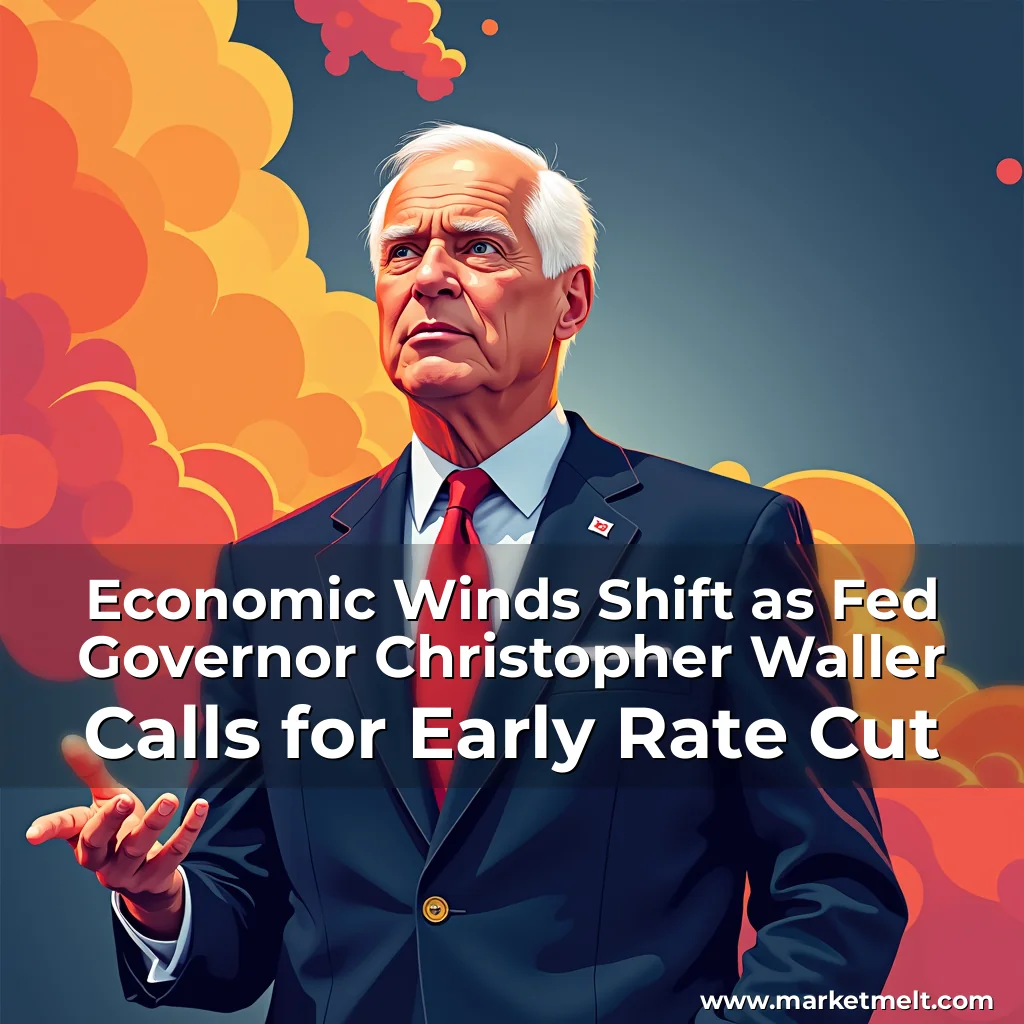
The Federal Reserve, in the midst of navigating complex economic data, is experiencing a shift in sentiment regarding monetary policy. Federal Reserve Governor Christopher Waller has made a bold statement, calling for a 25-basis-point interest rate cut in July, which signals growing support within the central bank for near-term easing. Waller’s position represents a more aggressive stance than many of his colleagues have taken publicly, potentially creating momentum for earlier policy action than markets currently expect. This move comes as the Federal Reserve navigates data showing both progress on inflation and concerning signs in employment metrics. Key Points:
- Waller’s comments come ahead of the Fed’s highly anticipated July meeting, where the future direction of monetary policy will be determined.
- Waller’s position represents a more aggressive stance than many of his colleagues have taken publicly, potentially creating momentum for earlier policy action.
- The timing of Waller’s remarks adds significance to his position, coming just weeks before the Federal Open Market Committee meets to determine the future direction of monetary policy.
The Fed’s focus on economic data, rather than electoral cycles, is crucial for effective monetary policy implementation. However, the intersection of monetary policy and electoral politics creates additional challenges for Fed officials, who must balance their dual mandate of price stability and full employment while maintaining credibility and independence.
Waller emphasized the importance of the Fed remaining focused on economic indicators rather than electoral cycles. The central bank’s independence has historically been viewed as crucial for effective monetary policy implementation.
Some Fed officials have voiced caution about moving too quickly, arguing for additional economic data before implementing rate cuts. This internal debate reflects differing interpretations of current economic conditions and appropriate policy responses.
- Some Fed officials worry that cutting rates too early could reignite inflation pressures just as the central bank appears to be making progress on price stability.
- Others express concern that waiting too long could increase risks of economic slowdown or unnecessary labor market deterioration.
The Fed has maintained steady interest rates since last year while working to balance its dual mandate responsibilities. Recent economic developments have complicated this balancing act by presenting mixed signals about appropriate policy direction. Market participants are closely monitoring statements from various Fed officials to gauge the likelihood of policy changes and their timing. The diversity of views within the Fed suggests that upcoming economic data releases will play a crucial role in determining final policy decisions.
Economic Indicators Supporting an Early Rate Cut
Recent economic indicators show faster-than-expected progress on inflation, alongside emerging softness in labor market conditions. The Consumer Price Index data has shown meaningful deceleration in price pressures across multiple categories.
- Recent Consumer Price Index data has shown meaningful deceleration in price pressures across multiple categories.
- Labor market indicators have begun showing subtle but notable changes, including slower wage growth and slight increases in unemployment claims in certain regions.
- Consumer sentiment data has also supported the case for policy adjustment, with households expressing growing confidence that inflation pressures are easing.
The combination of cooling inflation and labor market softening creates what Waller views as an optimal window for policy adjustment before economic conditions potentially deteriorate further.
Political Pressure Complicates Fed Decisions
Waller’s remarks come during a particularly tense political moment, as President Donald Trump has publicly called for the removal of Fed Chair Jerome Powell, accusing the central bank of delaying rate cuts to influence election outcomes.
Despite the political noise surrounding monetary policy decisions, Waller emphasized the importance of the Fed remaining focused on economic indicators rather than electoral cycles. The central bank’s independence has historically been viewed as crucial for effective monetary policy implementation.
The intersection of monetary policy and electoral politics creates additional challenges for Fed officials who must balance their dual mandate of price stability and full employment while maintaining credibility and independence.
Internal Fed Debate Intensifies
While Waller advocates for immediate action, several other Fed policymakers have voiced caution about moving too quickly, arguing for additional economic data before implementing rate cuts.
- Some Fed officials worry that cutting rates too early could reignite inflation pressures just as the central bank appears to be making progress on price stability.
- Others express concern that waiting too long could increase risks of economic slowdown or unnecessary labor market deterioration.
The Fed has maintained steady interest rates since last year while working to balance its dual mandate responsibilities. Recent economic developments have complicated this balancing act by presenting mixed signals about appropriate policy direction. Market participants are closely monitoring statements from various Fed officials to gauge the likelihood of policy changes and their timing. The diversity of views within the Fed suggests that upcoming economic data releases will play a crucial role in determining final policy decisions.
Critical Data Releases Ahead
All eyes now turn to upcoming economic data releases, particularly the next Consumer Price Index update and weekly jobless claims figures, which could significantly influence Fed policy deliberations.
| Upcoming Data Releases | Expected Impact |
| Next Consumer Price Index Update (July 30-31) | Could significantly influence Fed policy deliberations and shape market expectations. |
| Weekly Jobless Claims Figures (July 30-31) | Could provide additional insights into labor market conditions and influence Fed policy decisions. |
The Fed’s ultimate decision will likely depend on whether economic data confirms the trends Waller has identified or suggests that current conditions remain stable enough to warrant continued patience with policy adjustments.
The July 30-31 Fed meeting represents a pivotal moment for monetary policy direction, with Waller’s position potentially gaining support if economic data continues supporting the case for earlier action.