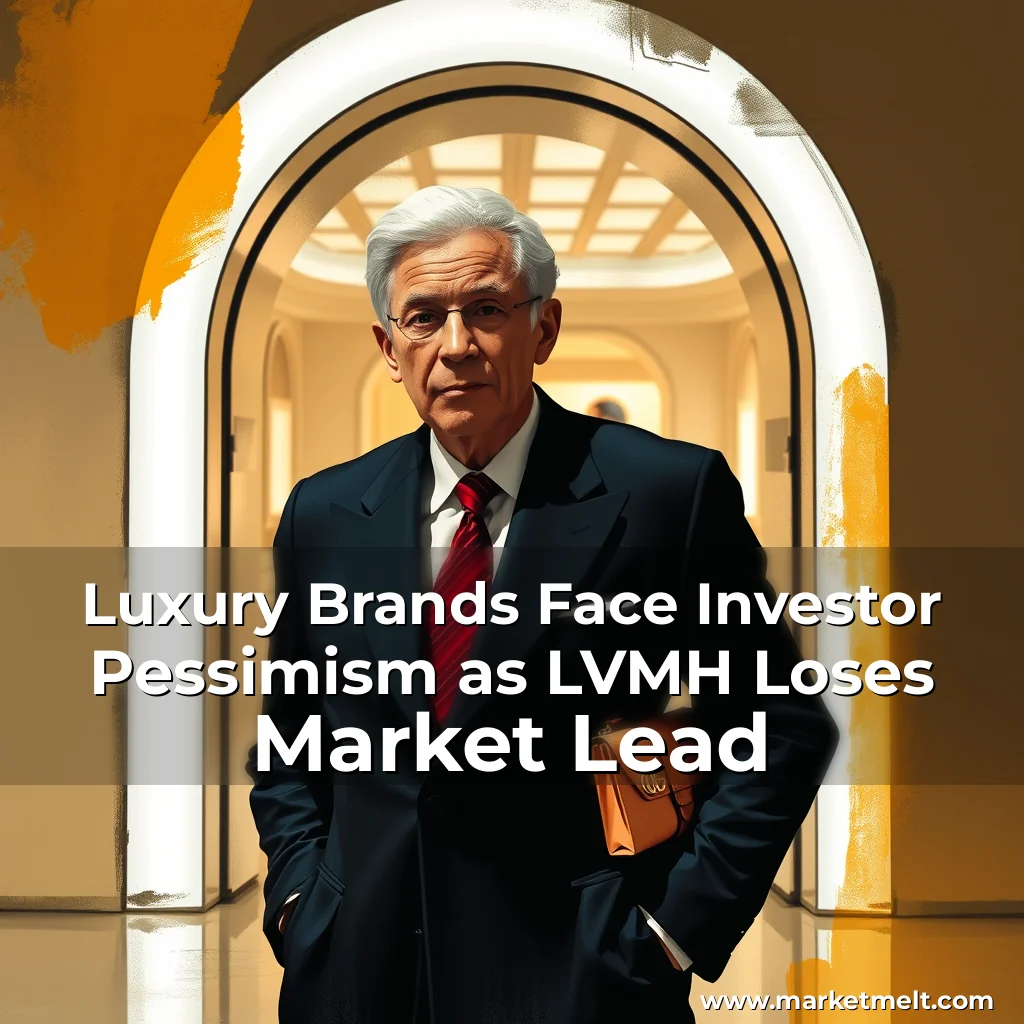
• Luxury brands LVMH and Hermès have seen a significant shift in investor sentiment, with LVMH losing its position as Europe’s largest luxury company in terms of market capitalization due to disappointing first-quarter revenue from the sector. • LVMH, which owns high-end brands such as Louis Vuitton, Dior, Tiffany & Co., and Sephora, missed expectations for first-quarter sales, with US shoppers reducing purchases of beauty products and cognac, and sales in China remaining weak. • Hermès, on the other hand, has seen a boost in investor confidence due to its strong sales performance and tight production control, allowing it to better weather the industry downturn.
| Market Performance | LVMH | Hermès |
|---|---|---|
| Market Capitalization | €246 billion | €247 billion |
| First-Quarter Sales | 3% decline | No data available |
“The post, post-Covid world” is characterized by diverging performance and investor sentiment about the two companies. LVMH’s larger exposure to the lower end of the luxury spectrum makes it more vulnerable to economic fluctuations. In contrast, Hermès has a wealthier client base that allows it to maintain its market share despite the downturn.
• “The overtaking in market cap is quite telling of the post, post-Covid world,” said Flavio Cereda, who manages GAM’s Luxury Brands investment strategy. “LVMH fashion labels have enjoyed a far greater market share than in the past, but Vuitton’s focus on middle-range luxury goods is an area of concern.”
• LVMH shares dropped 7.2%, leading share declines across the sector, with Gucci-owner Kering and Hermès down 2% and 0.3% respectively.
- US President Donald Trump’s recent tariff announcements have sparked fears of a recession, which has led to a decline in luxury sales.
- The sector is facing a difficult trading environment, with a 3% decline in LVMH’s first-quarter sales, well below analyst expectations for 2% growth.
- The performance signaled another difficult year for luxury companies, following the recent tariff announcements.
Investor Sentiment Shift
• Investors had been hoping for the luxury sector to recover, but the recent performance has raised concerns about a global recession. • The recent decline in luxury sales has led to a shift in investor sentiment, with luxury brands being viewed as a more vulnerable sector. • Deutsche Bank notes that improvement seen at the end of 2024 is now an anomaly, as LVMH’s key fashion and leather goods business reverted to 5% sales declines. • Shares of luxury companies have traded lower since the end of March, with LVMH, Kering, and Burberry all down 14%, Richemont down 13% and Hermès down 5%.
• RBC analyst Piral Dadhania lowered his organic sales forecast for LVMH this year to flat from growth of 3% expected previously, citing the first-quarter sales miss. • Bernstein analysts recently lowered their sales forecast for the sector this year to a decline of 2%, against a previous forecast for 5% growth, a drop that would mark the industry’s longest downturn in over two decades. Post-Covid World
• The recent shift in investor sentiment has highlighted the challenges faced by luxury brands in the post-Covid world. • The industry is facing a difficult trading environment, with a decline in luxury sales and a shift in investor sentiment. • The post-Covid world is characterized by diverging performance and investor sentiment about the two companies, with LVMH’s larger exposure to the lower end of the luxury spectrum making it more vulnerable to economic fluctuations.