
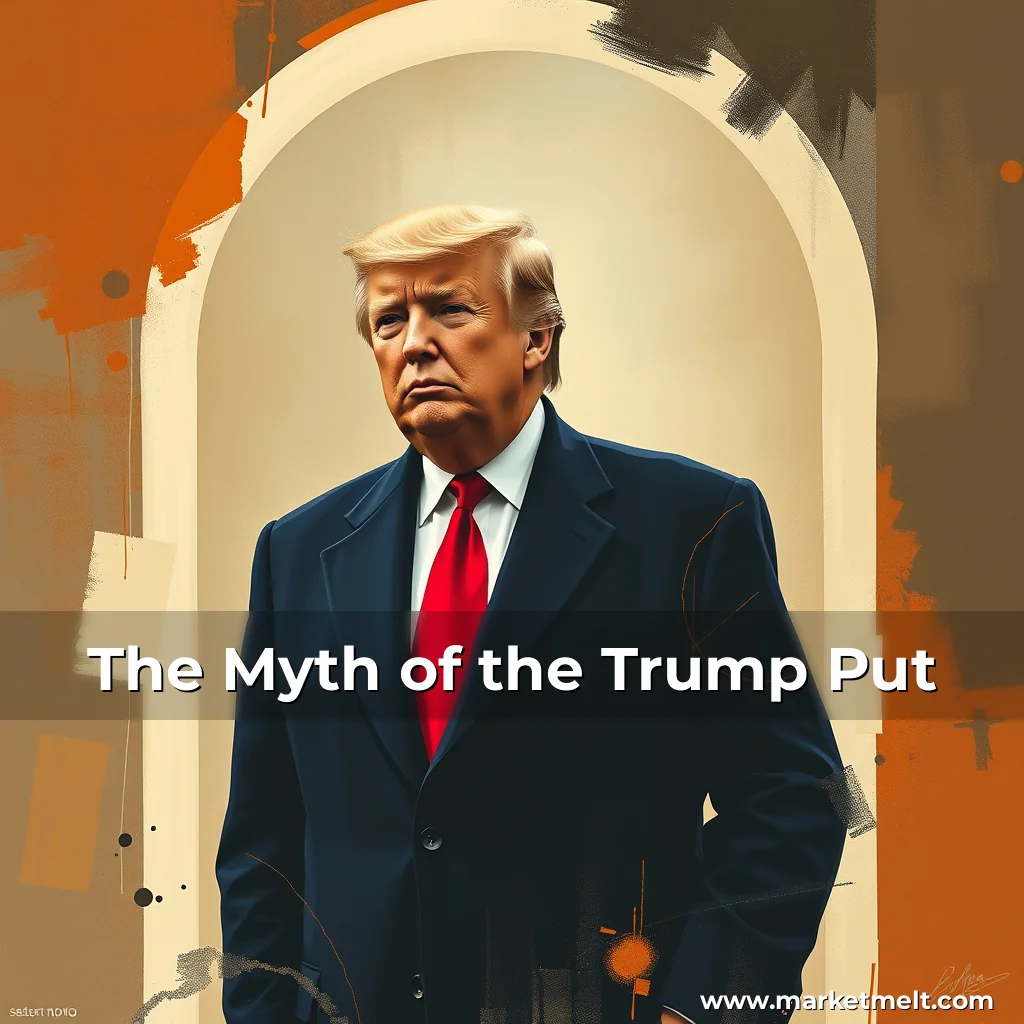
The recent sharp downturn in US equities, triggered by sweeping tariffs and mounting investor anxiety, has debunked the myth of the “Trump put.” The term was always a stretch, modelled on the well-known “Fed put,” which refers to the belief that the US Federal Reserve will intervene to prop up markets when needed.
The Illusion of the Trump Put
The “Trump put” was based on the idea that Trump would never let the markets fall too far, if only because he views the stock market as a referendum on his leadership. However, this interpretation was willfully blind to what Trump has always made abundantly clear: his economic instincts are not driven by market efficiency or global integration, but by protectionism, bilateralism, and a deeply transactional, even greedy view of trade.
Trump’s Economic Views
During both his 2016 and 2024 campaigns, Trump made no secret of his disdain for multilateral trade agreements, his suspicion of global supply chains, and his preference for tariffs as a tool of statecraft. His supporters on Wall Street clung to the idea of the Trump put, seeing the 2017 corporate tax cuts and early market rally as evidence of a business-friendly president.
The Consequences of Trump’s Policies
However, the illusion is now shattered. The S&P 500 and Nasdaq have tumbled, investor confidence has weakened, and inflationary pressures are mounting again. The fact that these policies introduce volatility and erode investor trust is not a bug—it’s a feature. The longer-term impact on corporate earnings, cost structures, and global trade relations is only beginning to surface.
Global Trade Implications
US exporters now face retaliatory tariffs in key markets. Multinational supply chains are being restructured on the fly. Capital spending is slowing.
Markets’ Irrational Exuberance
The sharp downturn in US equities highlights the irrational exuberance that periodically grips financial markets. For all the tools at their disposal, investors can still fall prey to political wish-casting, mistaking campaign bombast for policy pragmatism. In the case of Trump, the signals were always loud and clear. He would govern as he campaigned—loudly, unconventionally, and with zero concern for the market’s delicate nerves.
The faith in the Trump put also exposes a recurring flaw in market psychology: the assumption that any administration, regardless of ideology, will eventually pivot to placate Big Money. However, Trump is less interested in Wall Street appeasement and more invested in cultivating his populist narrative—where elite institutions are the enemy and economic pain is merely the price of reclaiming American sovereignty.
The broader investment landscape is now discovering that the tremors go far beyond stock valuations. Safe-haven assets—long considered immune to political upheaval—have faltered just when they’re needed most. A recent Bloomberg report documenting how gold, Treasury bonds, and even the dollar have failed to provide shelter in this storm points to a deeper problem: that the volatility induced by Trump’s policies is turning out to be more corrosive than previously feared.
Integrating these insights adds another layer to the unraveling myth. The destabilisation caused by Trump’s protectionist stance is not confined to risk assets; it now infects instruments once thought to be reliable ballast. The answer is uncertainty. And markets, as we know, price that with a vengeance. So, what next? For investors, it means recalibrating expectations. The Trump put is dead. If anything, the new era will be defined more by economic brinkmanship than by backstops.