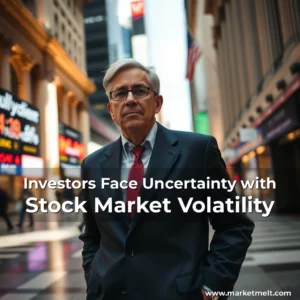

When U.S. markets continue to suffer from steep declines in the wake of the Trump administration’s new tariff policies, individual investors may be tempted to go into fight or flight mode, behavioral finance experts warn. However, this is the worst time to make decisions on how to invest your money, according to experts.
The Problem with Emotional Decision Making
Behavioral finance experts say that making decisions based on emotions is a recipe for disaster. “It is more likely to be driven by emotion and, in this case, emotion that is going to act against you rather than for you,” said Meir Statman, a professor of finance at Santa Clara University and author of the book, “A Wealth of Well-Being: A Holistic Approach to Behavioral Finance.”
- When the market drops, we have sort of a herd instinct. We want to run towards safety and away from danger, just like our ancestors did when they were hunters and gatherers.
- This instinct can backfire when it comes to investing, as we’re more likely to sell at the absolute worst times.
Why Emotional Decision Making Can Be So Damaging
“Never trust your instincts when it comes to investing,” said Bradley Klontz, a psychologist, certified financial planner and managing principal of YMW Advisors in Boulder, Colorado, and a member of the CNBC FA Council. “When conditions are stressful, our frame of reference narrows to today, tomorrow and what’s going to happen. It may be tempting to come up with a story for why taking action now makes sense, but this can lead to impulsive decisions.”
Moreover, investors often rely on fast thinking when they’re in a state of panic, said Danielle Labotka, behavioral scientist at Morningstar. “But good investment decisions take time. We need to slow down and think about our goals and values, not just react to the news of the day.”
What Should Guide Your Decisions Now
Many investors have experienced market drops before, but it’s easy to get caught up in the idea that this time is different. “Even though we’ve experienced volatility before, it feels different every time,” said Labotka. “That can make it difficult to heed to the advice to stay the course.”
Investors would be wise to ask themselves whether their reasons for investing and the goals they’re trying to achieve have changed, experts say. “Even though the markets have changed, why you’re invested, your values and your goals probably haven’t,” said Labotka.
“Things are never perfect for anyone,” said Statman. “In life, as in an investment portfolio, all stocks don’t necessarily go up, and it’s helpful to learn to live with the good and the bad. We need to take a broader view and focus on our long-term goals rather than getting caught up in short-term market fluctuations.”
Key Takeaways
| Key Takeaway 1 | Don’t make impulsive decisions based on emotions. |
| Key Takeaway 2 | Take a broader view and focus on your long-term goals. |
| Key Takeaway 3 | Slow down and think about your goals and values rather than reacting to the news of the day. |
Conclusion
In times of market volatility, it’s easy to get caught up in the fear and uncertainty. However, behavioral finance experts warn that making decisions based on emotions is a recipe for disaster.